
If you’ve been in marketing long enough, you know that doing everything manually is a recipe for burnout and missed opportunities. Between managing email campaigns, tracking leads, scheduling social posts and analyzing performance data, there’s simply too much to juggle without a little help.
That’s where automation tools come in. They don’t replace marketers, they free them up to focus on strategy, creativity, and the work that actually moves the needle. In 2026, the landscape of marketing automation has matured significantly, and the good news is there’s something for every team size and budget
Here are the seven tools that should be on every marketer’s radar this year.
1. HubSpot Marketing Hub
HubSpot has been a cornerstone of the marketing automation world for over a decade, and it’s not slowing down. What makes it stand out is how everything lives under one roof; email marketing, CRM, landing pages, social media scheduling, lead scoring and detailed analytics.
For marketers who are tired of piecing together five different platforms, HubSpot is genuinely refreshing. You can build automated workflows that trigger based on a user’s behavior, such as visiting a pricing page or downloading a resource, and then nurture that lead with a personalized sequence without lifting a finger.
The downside? It’s pricey at scale. But for mid-sized to enterprise teams that want a single source of truth for their marketing data, the investment tends to pay off quickly. There’s also a free tier that’s surprisingly capable if you’re just getting started.
Best for: All-in-one marketing and CRM management.
Pricing: Free plan available; paid plans start at $15/month per seat.
2. ActiveCampaign
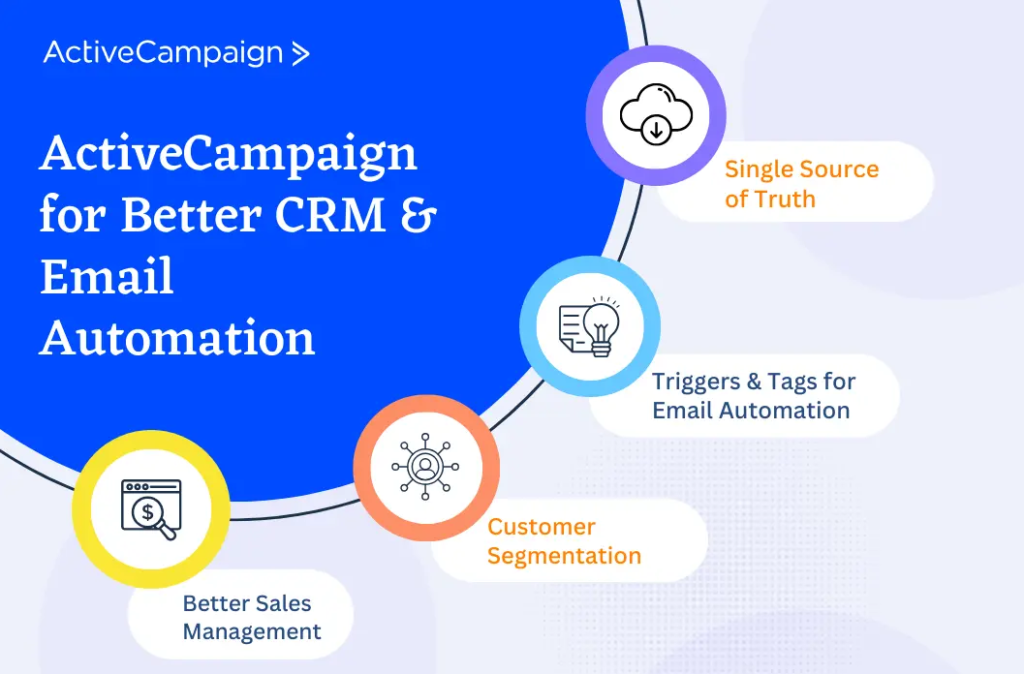
If email marketing and customer experience automation are your priorities, ActiveCampaign is hard to beat. It’s particularly well-loved by small to mid-sized businesses because it offers sophisticated automation features without the enterprise-level price tag.
What sets ActiveCampaign apart is the depth of its automation builder. You can create complex, multi-step workflows with conditional logic. For example, if a contact clicks a specific link, they go down path A; if they don’t open the email at all, they go down path B. This level of personalisation used to require expensive platforms or a developer on your team.
It also integrates smoothly with over 900 apps, meaning it likely connects with whatever tools you’re already using. The reporting could be more intuitive, but its automation capabilities more than make up for it.
Best for: Email automation and customer journey mapping.
Pricing: Starts at $15/month for up to 1,000 contacts.
3. Klaviyo
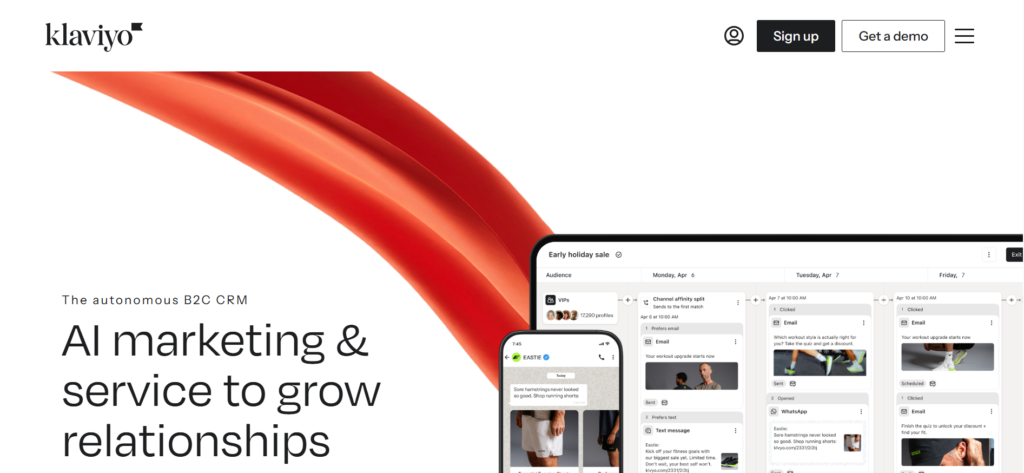
Klaviyo has become the go-to automation tool for e-commerce brands, and for good reason. It was built specifically for online retail, which means its segmentation, personalisation, and revenue attribution features are deeply tailored to that use case.
Where general marketing platforms treat e-commerce as an add-on, Klaviyo treats it as the foundation. You can sync your store data in real time, then use that data to trigger highly targeted campaigns; abandoned cart sequences, post-purchase flows, win-back campaigns, and more. The platform shows you exactly how much revenue each automation is generating, which makes it easy to justify the spend.
In 2026, Klaviyo has also expanded its SMS automation capabilities significantly, making it a genuine multi-channel platform rather than just an email tool.
Best for: E-commerce brands.
Pricing: Free up to 500 contacts; paid plans based on contact list size.
4. Marketo Engage (Adobe)
For enterprise marketing teams dealing with long sales cycles and complex buyer journeys, Marketo Engage remains one of the most powerful automation tools available. It handles everything from lead management and account-based marketing (ABM) to multi-touch attribution and advanced analytics.
Marketo’s strength lies in its ability to scale. Whether you’re managing tens of thousands of leads or running dozens of campaigns simultaneously across multiple markets, it handles the complexity without breaking a sweat. The integration with Adobe’s broader ecosystem, including analytics, content management and advertising tools also adds serious depth for teams already in that world.
It’s not the easiest platform to learn, and it requires dedicated resources to manage well. But for large teams with the right setup, Marketo is genuinely in a league of its own.
Best for: Enterprise B2B marketing teams.
Pricing: Custom pricing based on database size and features.
5. Mailchimp
Mailchimp has evolved considerably from its early days as a basic email newsletter tool. Today, it’s a solid mid-range marketing automation platform with email campaigns, audience segmentation, landing pages, social ads, and basic CRM functionality.
What Mailchimp does particularly well is accessibility. The interface is clean and beginner-friendly, which means your team can get up and running quickly without a steep learning curve. The automation features cover the essentials including welcome sequences, birthday emails, re-engagement campaigns, and they work reliably.
For very small businesses or solo marketers who want straightforward automation without complexity, Mailchimp hits the sweet spot. It won’t out-feature HubSpot or ActiveCampaign, but for many teams, it doesn’t need to.
Best for: Small businesses and beginners.
Pricing: Free plan available; paid plans start at $13/month.
6. Salesforce Marketing Cloud
Salesforce Marketing Cloud (SFMC) is built for organisations that need enterprise-grade marketing automation tightly integrated with their sales operations. If your company already runs on Salesforce CRM, SFMC is the natural extension, it allows marketing and sales teams to share data, align on lead handoffs, and create a truly connected customer experience.
The platform covers email, mobile messaging, social, advertising, and web personalisation, all within a single ecosystem. Its Journey Builder feature lets you design sophisticated customer journeys that respond dynamically to real-time behaviour across every touchpoint.
The trade-off is complexity and cost. Implementing SFMC properly typically requires specialist expertise, and the licensing can be significant. But for companies where alignment between marketing and sales is mission-critical, there’s no better tool for the job.
Best for: Large enterprises with existing Salesforce infrastructure.
Pricing: Custom pricing; typically starts in the thousands per month.
7. Zapier
Zapier is a different kind of automation tool. It’s not a marketing platform in itself, but it might be the glue that holds your entire marketing stack together. It connects over 7,000 apps and allows you to automate repetitive tasks between them without writing a single line of code.
Think of the small, tedious tasks that eat up time: copying form submissions into a spreadsheet, notifying your team in Slack when a new lead comes in, adding webinar registrants to your email list. Zapier handles all of that automatically.
In 2026, Zapier has introduced AI-powered automation features that can suggest workflows based on your existing tools and usage patterns, a genuinely useful addition. It’s not a replacement for a dedicated marketing automation platform, but for teams on a budget or those who want to fill gaps between their existing tools, it’s indispensable.
Best for: Connecting and automating across multiple apps.
Pricing: Free plan available; paid plans start at $19.99/month.
How to Choose the Right Tool for Your Team
With so many options, the decision comes down to a few key questions:
- What’s your team size and technical capacity? Some tools like Marketo and SFMC require dedicated admins. Others like Mailchimp and Zapier are built for self-service.
- What’s your primary channel? If email is your backbone, ActiveCampaign or Klaviyo (for e-commerce) will serve you well. If you need a full suite, look at HubSpot.
- What does your stack already look like? The best tool is often the one that integrates most cleanly with what you already use.
- What’s your budget? There’s no shame in starting with a free plan and growing into a paid one. Most of these platforms are designed to scale with you.
Final Thoughts
Marketing isn’t about doing more, it’s about doing the right things more efficiently. The right automation tools take the repetitive, time-consuming work off your plate so you can focus on strategy, creativity, and building real relationships with your audience.
Whether you’re a solo marketer running alone or part of a large enterprise team, there’s a tool on this list that fits your situation. The key is to start, experiment, and optimize. Automation isn’t a set-it-and-forget-it solution, it’s an ongoing practice. But once it’s working, the results speak for themselves.
Start with one tool, get it right, and build from there. Goodluck!